



One missed filing. One sloppy bank account. One ignored annual report. That’s all it can take to destroy the asset protection business owners thought they had. When the lawsuit, tenant issue, audit, or creditor problem finally shows up, nobody cares if you had good intentions. They care whether you actually respected and maintained the entity.
Forming the LLC Is the Beginning, Not the Finish Line
A lot of business owners think asset protection starts and ends with filing the LLC online. They get the entity, open a bank account, maybe hear about a holding company strategy on YouTube, and then mentally move on. Bless their hearts, that’s not how this works.
An LLC, corporation, partnership, or holding company needs to be treated like a real company long after the paperwork gets filed. That means maintaining company records, keeping the entity active with the state, using a proper registered agent, separating business banking from personal banking, documenting major decisions, and maintaining annual minutes and resolutions. It’s not glamorous stuff. I get it. But this is where lawsuits are won or lost.
When an opposing attorney comes after you, they are going to ask one major question: was this a real company or just a piece of paper? And if you don’t respect your own entity, don’t expect a judge to respect it either.

The Registered Agent Isn’t Just a Technicality
A classic rookie mistake I’ve seen a lot is business owners listing themselves as the registered agent for their LLC. They use their home address, click submit, and never think about it again. I beg of you, please DO NOT DO THIS.
If you do, your personal address is now sitting on public records where tenants, customers, scammers, creditors, marketers, and opposing attorneys can all find it with a simple Google search. Once that information gets out there, good luck cleaning it up.
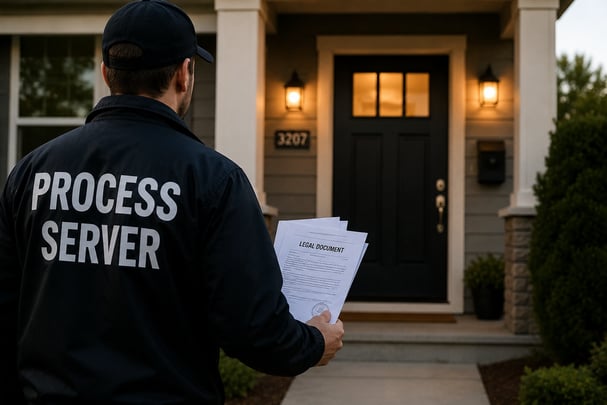
A professional registered agent helps solve two important problems. First, it keeps your personal address private. Second, it makes sure legal notices, state correspondence, annual report reminders, and lawsuit paperwork actually get delivered properly. And that matters a lot more than you think. The last thing you want is a process server showing up at your house during dinner with your family because business paperwork was tied directly to your personal address.
Privacy and asset protection are NOT the same thing, but they work together. Asset protection is the shield. Privacy is the camouflage.
Good Standing With the State Is Asset Protection
If your LLC falls out of good standing with the state, your asset protection starts falling apart too. Every state has different rules. Some require annual reports. Some have franchise taxes. Some tie deadlines to your formation date. Others use fixed annual deadlines. Miss those filings and the state can suspend your entity, administratively dissolve it, assess penalties, or create major problems when you try to refinance property, open bank accounts, respond to an audit, or defend yourself in court.
The scariest part is that you might not realize there’s even a problem until you’re already in hot water. That’s when cleanup gets expensive.
I’ve seen people spend thousands cleaning up entities that could have been maintained for a couple hundred bucks a year to begin with. Good standing proves you’re treating the entity seriously instead of casually operating through a shell company you forgot about years ago.
Annual Minutes Matter
Some people love saying LLCs don’t technically require annual minutes. Sure, and some people say you don’t need to floss either. That completely misses the point.
Annual minutes are proof that your company is operating like a legitimate business. They document ownership changes, major decisions, tax elections, reimbursements, retirement contributions, board meetings, strategic planning, and purchases or sales of major assets. That's the key piece to holding up in a lawsuit or audit.
If someone’s trying to pierce the corporate veil and sue you personally, one of the first things they are going to ask for is documentation showing the company was respected properly. Annual minutes help tell that story.
They’re also one of the best opportunities for tax planning. Board meetings, reimbursements, accountable plans, travel, retirement strategy decisions, and company meetings can all be documented properly through annual minutes when handled correctly.
Want to take the risk and test this theory? Try recreating five years of missing documentation after a lawsuit shows up.
Sloppy Banking Creates Problems
If your business income constantly flows into your personal account, you’re creating problems. If you’re paying personal expenses from the business account, you’re creating problems. If money is constantly moving back and forth between you and the company without documentation…you guessed it, you’re creating problems.
The entire purpose of an LLC or corporation is separation. That separation has to exist in real life, not just on the paperwork you filed with the state. Business income should go into business accounts. Business expenses should come out of business accounts. Owner draws should be tracked properly. The bookkeeping should tell a clean story.
Now, is one accidental mistake going to destroy your structure? No. Sometimes business owners accidentally pay for a business expense personally or vice versa. But when sloppy banking becomes a pattern, opposing attorneys love it. Because now they can stand in court and say “This wasn’t a real company. It was just their personal piggy bank.” Don’t hand them that argument.
.png?width=791&height=206&name=The%2010%20Biggest%20LLC%20Mistakes%20(And%20How%20to%20Avoid%20Them!).png)
The Trifecta Only Works If You Maintain It
Another mistake is thinking the Trifecta is just a diagram you draw one time and forget about. Nope. The Trifecta works because it coordinates your operational business, your investment holdings, and your estate plan into one organized system. On one side sits the operating company or S corp. On the other side sits rental properties, investments, and passive assets. Underneath everything sits the revocable living trust that ties the structure together. But none of that matters if the entities are ignored after formation.
The S corp still needs payroll. The LLCs still need maintenance and compliance. The trust still needs to stay funded and updated. The annual minutes still need to be maintained. The bookkeeping still needs to stay clean. The Trifecta is powerful because it creates organization, visibility, privacy, and coordination. But like every structure, it only works when it’s maintained consistently over time.
The Bottom Line
Most business owners don’t lose asset protection because they picked the wrong LLC. They lose it because they ignored the “boring” maintenance that makes the LLC legitimate in the first place. When the details get ignored, even the fanciest structure in the world can fall apart under pressure. If an LLC or corporation is not maintained properly, if your trust is not funded, if your bookkeeping is sloppy, then you don’t really have asset protection.
If you want help getting your structure organized and bringing everything together, please get in contact with my team at KKOS Lawyers. It’s more affordable than most people realize, and they can help you build or clean up the right structure for your business, investments, and estate plan.
And if your organization is already pretty solid but you need help with the ongoing maintenance, annual minutes, compliance filings, bookkeeping organization, and all the boring but critical stuff that actually matters, book a free call with my team at Main Street Business Services. They help business owners across the country stay compliant, organized, and protected so they can focus on running their business instead of worrying about missing something important.
.png?width=2240&height=500&name=Main%20Street%20Business%20Services%20Book%20a%20Call%20(1).png)