




Most business owners think their LLC already protects everything they own. Then they get sued personally after a car accident, a bad personal guarantee, a divorce, or some other disaster and suddenly realize their “asset protection” might only work one direction. That’s where a COPE LLC comes into the conversation.
What Is a COPE LLC?
COPE stands for Charging Order Protection Entity. In most cases, this is an LLC specifically designed and maintained to create stronger protection against your personal liabilities.
A traditional LLC is primarily designed to protect you personally from liabilities that happen inside the business. For example, if a tenant slips and falls at your rental property, the LLC helps shield your personal assets from that lawsuit. But what happens if the problem starts in your personal life instead? What if you get sued personally because of a car accident, a personal guarantee, a creditor issue, or some other catastrophic lawsuit?
That’s where the COPE strategy comes in. The goal of a COPE LLC is to make it significantly harder for a personal creditor to force the liquidation or seizure of assets owned inside the entity.
The Big Misunderstanding About LLCs
This is one of the biggest misconceptions I see online. People form an LLC for a rental property and assume “My rental is now protected from everything.” Not exactly.
What they really created was protection against liabilities generated by the property itself. That’s important. But they didn’t necessarily create strong protection from personal lawsuits attacking the LLC from the outside.
That distinction matters more than most people realize.
As investors start building meaningful wealth, they eventually discover there’s a huge difference between:
- inside liability protection
- and outside liability protection
A COPE structure is designed to strengthen that outside protection side of the equation.
How Charging Order Protection Works
The legal concept behind a COPE LLC revolves around something called a charging order. Which sounds more complicated than it is.
Let’s say you personally get sued after a car accident and lose. Normally, a creditor wants to come after anything you own. But if your rental properties or investments are sitting inside an LLC with strong charging order protection, the creditor may not be able to force the sale of those assets or take over the company itself. Instead, they might only be entitled to distributions that would normally be paid out to you from the LLC. That’s a big difference.
Because now the creditor is sitting there waiting around hoping the LLC makes distributions someday, but they usually can’t force the LLC to sell property, liquidate assets, or hand over management control. And that changes the entire leverage dynamic of the lawsuit.
The goal here is not creating some magical lawsuit-proof structure. No legitimate attorney should ever promise that. The goal is making things difficult, expensive, and frustrating enough that creditors are far more motivated to settle instead of spending years fighting through layers of entity protection.
That’s why experienced investors pay close attention to entity structure, state selection, privacy, and maintenance. The stronger and cleaner the structure is, the harder it becomes for someone to come in and create chaos after a personal lawsuit.
A COPE LLC Is Not Bulletproof
A COPE LLC doesn’t protect against everything. The IRS can still come after assets for unpaid taxes. Divorce courts can still value and divide assets. Fraud, criminal activity, or gross negligence can destroy the protection completely.
And frankly, if somebody is trying to hide assets or play games with creditors, this strategy isn’t going to save them. Good asset protection revolves around creating legitimate legal barriers and operating your entities correctly, not pretending assets don’t exist.
Maintenance Matters More Than Formation
Whether you want to hear it or not, a COPE LLC only works if you actually maintain it properly. Most LLCs fail because the owner stopped treating the LLC like a real company. If you formed an LLC online five years ago and haven’t touched it since, there’s a good chance your protection has holes in it already.
You still need:
- annual minutes
- a real operating agreement
- separate banking
- separate bookkeeping
- corporate records
- membership certificates
- proper documentation
- and clean use of the company name on important contracts and paperwork
There’s a massive difference between “I formed an LLC” and “I properly operated and maintained an LLC.” Courts know the difference too.
One of the first things attorneys look for when trying to pierce the corporate veil is whether the owner respected the entity at all. Were business and personal expenses mixed together? Were there records? Was there documentation? Did anybody even operate this thing like a real company?
Privacy Still Matters
One of the smartest points in the COPE discussion is the role privacy plays alongside asset protection. A COPE LLC by itself doesn’t automatically create anonymity, but proper setup techniques can make your structure significantly harder to trace publicly. That may include using a proper registered agent, avoiding your home address on filings, using mail forwarding services, choosing discreet entity names, and limiting your name on public records whenever possible.
Which States Allow COPE Protection?
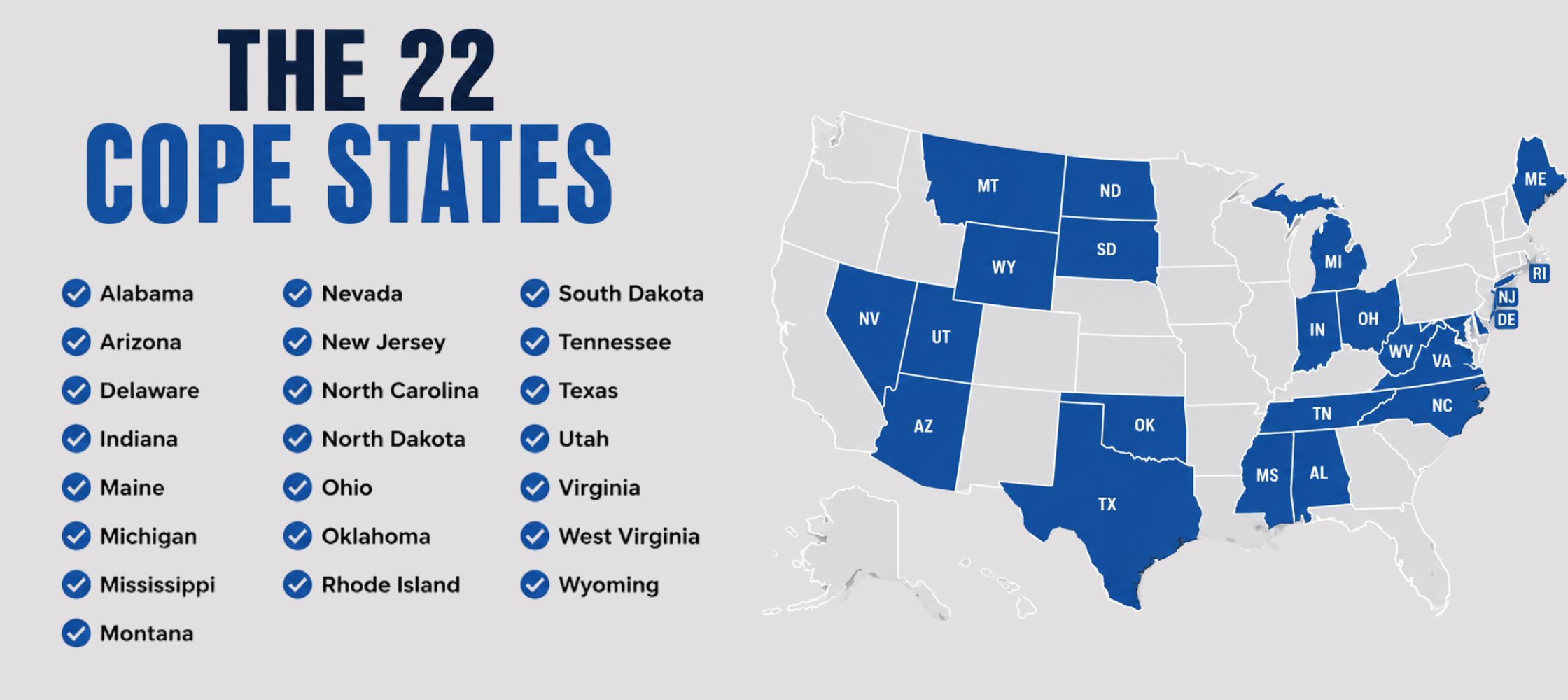
As of 2026, about 22 states have stronger charging order protection laws favorable to LLCs. But be careful. Just because you form a Wyoming LLC does not magically override the laws where your property is actually located.
For example, if you own rental property in Florida, you still have to deal with Florida operational realities even if your holding company is formed in Wyoming. This is why advanced structures often involve parent holding companies, subsidiary LLCs, layered ownership structures, and state specific planning.
The COPE Strategy That Makes the Most Sense
For experienced investors, one of the most practical setups is often a holding company formed in a strong COPE state with subsidiary LLCs operating in the states where the properties are located. That layered approach can create stronger barriers for personal creditors while still complying with the operational realities of each state.
But let me be clear, this is NOT usually where brand new investors should start. A lot of people jump straight to complicated structures before they even have proper bookkeeping, insurance coverage, annual minutes, or clean entity maintenance in place. The foundation has to come first.
The Bottom Line
A strong asset protection strategy can completely change the leverage in a lawsuit before the fight even starts. When your entities are structured correctly and layered the right way, it becomes much harder for personal creditors to reach valuable assets, disrupt operations, or pressure you into a bad settlement.
If you’ve built significant equity in rentals, businesses, or other assets and they’re still sitting exposed, book a Comprehensive Entity Set-Up with my law firm, KKOS Lawyers. We can review your current structure, identify where your wealth may be vulnerable, and determine whether a COPE LLC belongs in your asset protection strategy. The time to build these protections is before there’s a lawsuit or creditor at the door. Once the problem exists, your options can change dramatically.
And once your entities are structured correctly, you have to maintain them correctly. My team at Main Street Business Services can help with annual minutes, compliance, bookkeeping systems, and the ongoing administrative work that keeps your LLCs clean and organized.
Build the wall before someone tries to climb it. Protect the wealth you’ve already worked so hard to create.
.png?width=6440&height=1438&name=KKOS%20Book%20a%20Call%20(2).png)