




A business trip and a vacation aren't the same thing, but they don't always have to be completely separate either. I've helped business owners legitimately deduct travel expenses for years, and one of the biggest surprises is how many trips can qualify when they're planned correctly.
Start with a Legitimate Business Purpose
The most important requirement for any travel deduction is having a valid business purpose. The IRS allows you to deduct travel expenses that are ordinary and necessary for your trade or business. In other words, the trip should help you generate revenue, improve your business, strengthen relationships, or otherwise move your company forward.
Fortunately, finding a legitimate business purpose usually isn't that difficult. With a little planning, many trips can include meaningful business activities.
Some of my favorite examples include:
- Attend a conference or workshop. Whether it's a tax seminar, marketing conference, industry convention, or technical training related to your business, continuing education can provide tremendous value while also supporting a legitimate travel deduction.
- Hold your annual company meeting. If you own an LLC or corporation, your trip can be the perfect opportunity to meet with your board of advisors, review financial performance, discuss goals, evaluate investments, and plan for the coming year.
- Meet with clients or prospective customers. Traveling to strengthen existing relationships or develop new business is one of the most common reasons for deductible travel. Just make sure you document who you met with, what you discussed, and why the meeting benefited your business.
- Visit vendors, suppliers, or strategic partners. Touring a supplier's facility, negotiating pricing, or exploring new business opportunities can easily justify a business trip while creating long-term value for your company.
- Check on your rental properties. I say this all the time. If you enjoy traveling, consider investing where you travel. Visiting rental properties you already own, meeting with contractors or property managers, or overseeing repairs can all support a legitimate business purpose.
Can You Combine Business and Personal Travel?
Absolutely, and many business owners do. One of the biggest misconceptions about the travel deduction is that a business trip has to be all business. That's simply not true.
If the primary purpose of your trip is business, you can often include personal activities before, after, or around your meetings without losing the deduction. Maybe you spend a few extra days visiting family, take your spouse to dinner, or explore a new city after your conference ends. Those personal activities don't automatically prevent you from deducting the legitimate business portion of the trip. The important question is still whether the trip was primarily for business.
That's why planning matters. Before you leave home, schedule your meetings, register for the conference, coordinate visits with clients or vendors, and keep records of your business activities throughout the trip. Good planning makes for a much stronger deduction if the IRS ever asks questions.
Understand Business Days vs. Travel Days
One of the biggest factors in determining whether your travel expenses are deductible is understanding the difference between a travel day and a business day.
Travel Days
A travel day is exactly what it sounds like. It's the day you spend getting to or from your business destination.
Even though you may not attend a meeting or conference that day, those travel days are generally deductible when they're necessary to get you to a legitimate business event. The IRS recognizes that if you have to travel overnight to conduct business, the transportation itself is part of the business trip.
For example, if you fly to Chicago on Tuesday, attend meetings on Wednesday, and fly home on Thursday, all three days are part of your business trip.
Business Days
A business day is a day when your primary activity is conducting business.
That doesn't mean you have to work from sunrise to sunset. A widely accepted rule of thumb is that you should spend at least four hours engaged in legitimate business activities during normal business hours. That could include meeting with clients, attending a conference, touring a vendor's facility, holding board meetings, or working on your rental properties.
If business is the primary reason you're there, you've generally satisfied the requirement for a business day.
A Simple Example
Let's say you travel to Phoenix for an important client meeting.
-
- Tuesday: Fly to Phoenix.
- Wednesday: Meet with your client for most of the day.
- Thursday: Fly home.

Because the trip was primarily for business, your transportation, lodging, and other qualifying travel expenses for all three days are generally deductible.
Now let's look at a longer trip. You travel on Monday, conduct business Tuesday through Thursday, and return home on Friday. Since the trip is primarily for business, both travel days and all three business days are generally considered deductible business travel.

Now let's say your meeting is on Friday, but you stay through the weekend because you have another meeting on Monday. Those extra days may still qualify as business travel.
The Weekend Rule
One of my favorite travel rules is what's called the Standby Day Rule. A standby day is a day when you're not actually conducting business, but you're staying at your destination because it doesn't make sense to travel home before your next business activity.
Here's an example. Let's say you have meetings on Friday and another meeting scheduled for Monday. Instead of flying home for the weekend and buying two more plane tickets, you stay where you are until Monday. The IRS recognizes that's a reasonable business decision. In most cases, those Saturday and Sunday standby days are treated as part of your business trip.
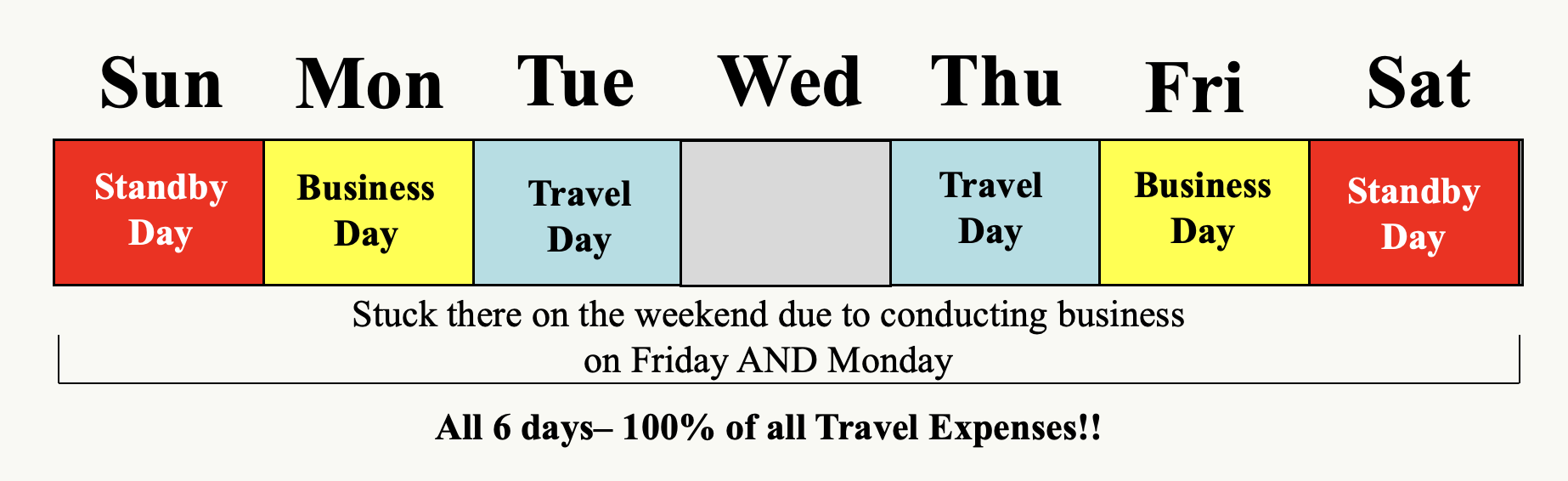
Now, don't push your luck. You can't schedule one meeting on Friday afternoon, another one the following Thursday, and call the entire week a business trip. Your itinerary still needs to make sense, and the business activities need to be the primary reason you're there. But if the weekend naturally falls between legitimate business days, the Standby Day Rule can work in your favor.
When Less Than Four Hours Still Counts
There are also times when you don't have to hit the four-hour rule for the day to count as a business day.
For example, maybe you have an important client presentation first thing tomorrow morning. It only makes sense to fly in the night before. That travel day is still part of your business trip because your presence is required.
The same idea applies when life throws you a curveball. Flights get canceled. Snowstorms roll in. Meetings get postponed. If you're stuck at your destination because of circumstances outside your control, those extra days don't suddenly become a personal vacation.
Let's say you fly to New York for a Wednesday meeting, but a blizzard shuts down the city and your meeting gets pushed to Friday. You spend the extra time sightseeing, grabbing dinner, or visiting a museum while you wait. That's okay. You're there because of a legitimate business trip, and those additional days generally remain part of your deductible travel.
Don't get caught up counting every minute of every day. The IRS is looking at the overall purpose of the trip. If your travel is legitimately driven by business and your schedule supports that purpose, you're on much stronger ground.
What Business Travel Expenses Can You Deduct?
Once your trip qualifies as business travel, there's a good chance more of your expenses are deductible than you realize.
Common deductible travel expenses include:
- Airfare and baggage fees
- Hotels, Airbnb stays, and other lodging
- Rental cars
- Uber, Lyft, taxis, and public transportation
- Parking fees and tolls
- Train fare and other transportation costs
In general, if the expense is ordinary, necessary, and directly related to your business travel, it's probably deductible.
If your trip includes both business and personal activities, don't assume you've lost the deduction. In many cases, you can simply allocate the expenses between the business and personal portions of the trip. That's one of the biggest misconceptions I see. A little sightseeing or an extra day with family doesn't automatically eliminate an otherwise legitimate business deduction.
Meals and Auto Expenses Are Different
One of the biggest mistakes I see is business owners throwing every expense from a trip into the "travel" category. Don't do that. The tax code treats travel, meals, and vehicle expenses differently, so it's important to keep them separate.
For example, meals you eat while traveling for business are generally only 50% deductible, even though the rest of your travel expenses may be fully deductible. That's why they belong in their own category on your tax return.
The same goes for transportation. If you're using a rental car, taking an Uber, or hopping in a taxi while you're on a business trip, those costs are generally part of your travel expenses. But if you're driving your own vehicle, you're back to the normal auto deduction rules, using either the standard mileage rate or your actual vehicle expenses.
It may seem like a small distinction, but keeping these expenses organized throughout the year will make tax time much easier and help ensure you're claiming every deduction correctly.
Common Business Travel Mistakes
The travel deduction is incredibly valuable, but it's also one of the easiest deductions to lose if you don't plan ahead.
Here are a few mistakes I see most often:
- Trying to deduct a vacation. Answering a few emails from the beach doesn't make your family vacation a business trip.
- Not documenting the business purpose. Keep a calendar, meeting notes, conference agendas, emails, and receipts that demonstrate why you traveled and what business you conducted.
- Assuming shopping for real estate qualifies. Simply looking at potential rental properties generally isn't enough. Visiting properties you already own, meeting with property managers or contractors, or making legitimate offers is much easier to support.
- Stretching a business trip into an extended vacation. Business travel can absolutely include personal time, but the overall trip still needs to be primarily for business.
Good documentation is just as important as the deduction itself. If you're ever audited, your calendar, receipts, and meeting records will often tell a much stronger story than your credit card statement alone.
The Bottom Line
Business travel doesn’t have to be all business or all personal. With a little planning, many trips can accomplish both. The key is making sure your travel has a legitimate business purpose, understanding how the IRS defines business travel, and keeping good records to support your deduction. When you follow the rules, business travel can become one of the most valuable tax-saving opportunities available to entrepreneurs.
But travel is only one piece of the tax strategy. If you want to make sure you’re capturing every legitimate deduction available to you, book a Comprehensive Tax and Business Consultation with my law firm, KKOS Lawyers. We can look at your entire tax picture, identify deductions and planning opportunities you may be missing, and build a proactive strategy around your business and financial goals.
Then make sure you have the right tax professional helping you implement that strategy throughout the year. Find a Main Street Certified Tax Advisor who has been trained by me to speak my language and understand proactive tax planning.
Don’t wait until your return is being prepared to find out which deductions you missed. Build the strategy now, document it correctly, and capture every legitimate write-off you’re entitled to.
.png?width=6440&height=1438&name=KKOS%20Book%20a%20Call%20(2).png)
Frequently Asked Questions
Can I deduct travel expenses for my spouse?
Only if your spouse has a legitimate business purpose for the trip. If they're traveling solely for personal reasons, their expenses generally aren't deductible.
Can I deduct international business travel?
Yes. International business travel can be deductible, but trips that combine business and personal activities may require you to allocate certain expenses.
Can I deduct travel before my business officially launches?
Usually not. Travel while exploring a business idea is generally considered a startup expense rather than a current business deduction.
Can I use airline miles or hotel points for business travel?
Yes, but you generally can't deduct the value of travel paid for with reward points since you didn't incur the expense.
What records should I keep for business travel?
Save receipts, travel confirmations, meeting agendas, conference registrations, and a calendar showing your business activities during the trip.
Can I extend a business trip for personal reasons?
Yes. As long as the primary purpose of the trip is business, you may still deduct the qualifying business expenses. Personal expenses for the extra days aren't deductible.