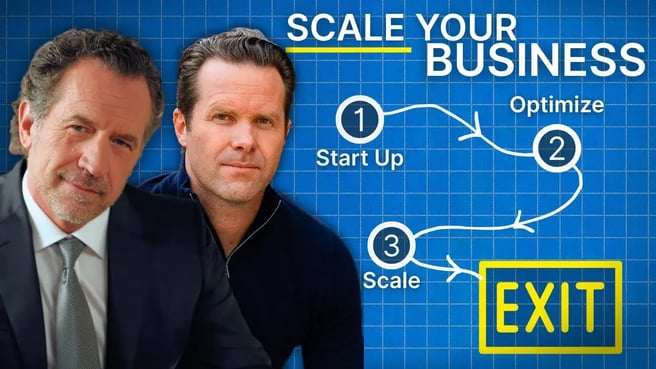




Every business moves through four basic phases: startup and structure, optimization and systemizing, scaling and saving, and exit and legacy. There aren't bright lines between them, and this isn't a race. But knowing where your business is right now can completely change the decisions you make, the people you need, where your money should go, and what you should be preparing for next.
Phase 1: Startup and Structure
You've got an idea. Maybe it's a side hustle. Maybe you've already set up an LLC, registered a domain, and started finding customers. You're trying to figure out your product or service, how you're going to make money, and whether this thing actually has legs. Welcome to startup.
I was in startup for five years, and I was suffocating my business. I expected the business to support me. Every dollar of profit had somewhere to go because I had a mortgage, bills, and a young family. I was living month to month on the business and pulling money out almost as quickly as I could make it. I wasn't giving the business enough room to grow.
Eventually, I picked up a couple of clients that provided more stable income. At the time, it wasn't necessarily what I wanted to do, but it gave me breathing room. Suddenly, I didn't have to pull every dollar out of another part of the business to pay my personal bills. I could reinvest those profits and let the business breathe. That's why I'm such a believer in starting with a side hustle when it makes sense. You don't necessarily need to quit your job tomorrow because you came up with a great business idea. Stable income can give your new business the runway it needs to find customers, develop its systems, and become profitable without immediately being responsible for your entire lifestyle.
If you can turn the business on tomorrow and immediately generate enough revenue to support yourself, fantastic. But most businesses have a ramp-up period. It could be three months, six months, or three years. Don't starve a good business before it has a chance to grow.
This is also why I call this phase startup and structure. Get the right entity in place, separate your business and personal finances, establish good bookkeeping, and start thinking strategically about taxes. You don't need every aspect of the business perfected on day one, but you do need a foundation that can support where you're trying to go.
Phase 2: Optimization and Systemizing
Once you're making consistent money, you start moving into the second phase: optimization and systemizing. This is where I spent about 12 years figuring things out. You're dialing in the product or service, watching costs, improving margins, developing systems, and hiring people. More importantly, you're beginning to discover that you are probably the bottleneck.
The big distinction in this phase is that you're learning how to duplicate yourself, not replace yourself. Replacement comes later during the exit phase. Right now, you're still running the business, but you cannot personally handle every customer, produce every product, answer every question, and approve every decision if you expect the company to grow. For us, that meant learning how to hire lawyers, tax advisors, paralegals, and other team members and teach them how to deliver our services properly. Your business may look completely different, but the principle is the same.
You don't scale a business. You scale people. People scale your business. Systems and processes absolutely matter, but people build those systems, follow them, improve them, and eventually change them as technology, customers, and competition evolve. If you want to eventually move into scaling, you need people capable of helping you get there.

Your Early Hires Can Create a Ceiling
Everybody tells entrepreneurs to hire A-players. I agree. Here's the problem: you may not be able to afford them yet. During optimization, you may hire someone because they're capable of doing the job you need today. Your first assistant becomes the office manager, and eventually that office manager ends up running a significant piece of the organization. Sometimes that person develops into an incredible leader. Sometimes they don't.
We've made the mistake of promoting people who were right for an earlier version of the company but weren't the right people to take us into the next phase. Eventually, you have to recognize when someone has reached the ceiling of a particular role. That can mean moving them into a position better suited to their strengths, or it can mean making a much harder change. Either way, keeping someone in the wrong leadership role because you're comfortable with them can eventually create a ceiling for the entire business.
Now, you don't have to scale. There's nothing wrong with building a great ten-person company that makes good money and gives you a life you enjoy. We used to go to a fantastic little restaurant called Pastry Pub, and we'd ask the owner why he didn't open another location. He didn't want one. He enjoyed coming to work, interacting with customers, and running that restaurant. He knew he could duplicate the concept, but he also knew he wouldn't enjoy the business as much. He knew what he wanted, and that's success too.
But if you do want to scale, you have to accept that eventually you cannot remain the smartest person in every room. If nobody in your company can make an important decision without you, you're going to stay in optimization.
Don't Ignore Tax Strategy While You're Optimizing
There's another mistake I see during startup and optimization: business owners paying too much in taxes because they're not structured properly. Once your business starts making real money, taxes will become one of your largest expenses. That's money that could potentially be supporting your family, funding growth, or building wealth.
This is the stage where spending a little money on proper planning can allow you to take two steps forward. Review your entity structure. Look at your payroll. Consider how you're paying your kids and other family members. Review retirement options. Sit down with your tax advisor and tax attorney and make sure the structure still fits the business you're building. Your strategy shouldn't be frozen in time simply because the LLC you formed three years ago worked when you were starting out.
Phase 3: Scaling and Saving
Now things are getting good. You've figured out the business, developed systems, built a team, and you're making money. Suddenly, you have a completely different problem: What do you do with the profits?
Do you put the pedal to the metal and reinvest every dollar into the business? Do you increase your lifestyle? Do you start buying assets? Do you max out retirement accounts? These are difficult questions because there's no single answer that works for every business owner.
I made a mistake here too. I put almost everything back into my businesses. I thought I was my best investment. If there was money available, I wanted to put it back into another opportunity and keep growing. Meanwhile, I watched my business partner Mat max out his retirement accounts and periodically buy rental properties. I'd sometimes give him crap because I wanted to put more money back into the businesses. Looking back, I wish I had started building those outside assets sooner.
I was what a farmer might call land rich and cash poor. I had businesses, but I wasn't funding my 401(k), IRAs, and outside investments as aggressively as I should have been. Now, putting everything back into your business isn't automatically wrong. You may legitimately believe you can generate a better return there, and you may be right. But go into that decision with your eyes wide open because you're concentrating an enormous amount of your financial future in one asset.
Live Three Years Behind Your Means
One of the best pieces of advice Mat received from a successful friend was to live three years behind your means. If your income takes off this year, don't immediately start living like someone making that new income. Keep living closer to where you were a few years ago. You'll eventually reward yourself and enjoy some of what you've built, but you don't need the expensive car and flashy lifestyle the minute the business starts producing cash.
At the same time, don't assume every available dollar needs to go back into the business. Take some money off the table. Fund retirement accounts. Build an investment portfolio. Consider rental properties and other assets that can create income independently of the operating business.
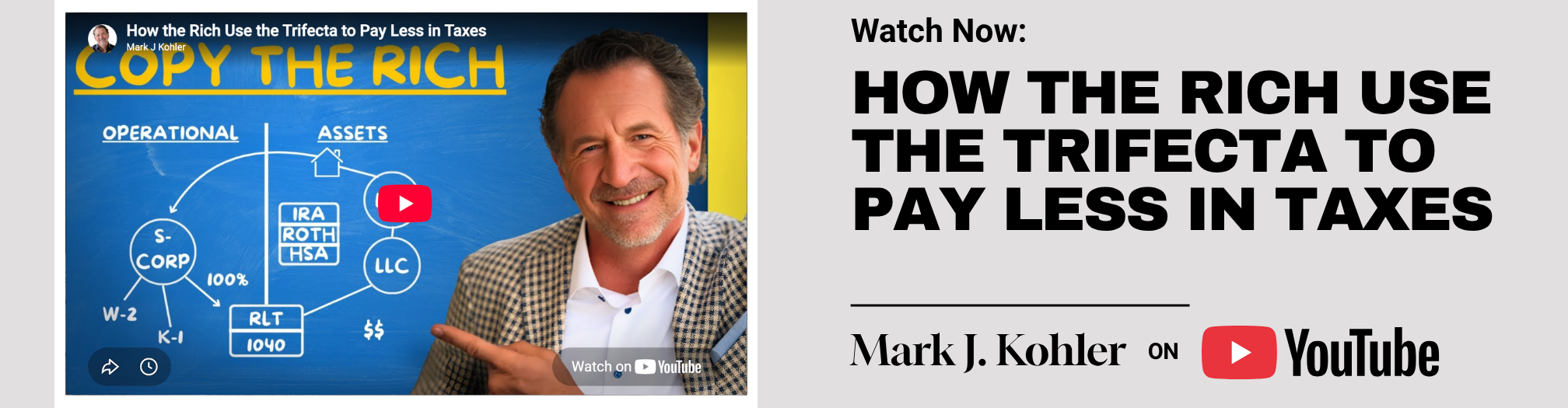
This is an important part of what I teach with the Trifecta. On one side, you have the operating business producing income. On the other side, you're accumulating assets such as real estate, retirement accounts, and investments. Your operating business requires you to work. Your assets can eventually work for you.
Don't Wait Until Exit to Start Saving
This may be the most important lesson in the scaling phase: Don't wait for the exit phase to start saving. I've consulted with thousands of business owners over the years, and unfortunately, not everyone gets the exit they imagined.
Sometimes the business doesn't sell for what they expected. Sometimes the industry changes. Sometimes health or family circumstances intervene. Sometimes an owner gets into their 60s and discovers that the business they thought would fund retirement isn't worth enough to do it. Suddenly, they're strapped into a business they can't afford to leave because they never built another pool of assets.
Build wealth while you're scaling, not only after you sell. You may still decide that your business deserves the majority of your available capital, and that's fine. But make that decision deliberately rather than assuming your business will someday provide the perfect exit.
Not Every Business Should Be Scaled
Scaling also requires you to ask a harder question: Is this actually the business I want to scale?
Years ago, Mat and I owned a title company. We had real estate investor clients who weren't being served particularly well by traditional title companies, so we saw an opportunity. We got the licenses, opened two offices, and hired experienced escrow officers. Then the real estate market fell off a cliff.
We pivoted into short sales and initially did very well because other title companies weren't prepared for them. Eventually everybody else figured it out, and we had to decide whether this was where we wanted to put our time, money, and energy. The business wasn't necessarily failing, but it was cyclical and didn't have the recurring revenue characteristics we wanted. We had other businesses where that capital and effort could create better opportunities.
So we shut it down. Sometimes shutting down a business is one of the best financial decisions you can make. Don't scale something simply because you already started it. Know when to hold it, when to pivot, and when to fold it.
Phase 4: Exit and Legacy
Eventually, you reach the fourth phase: exit and legacy. But exit doesn't necessarily mean selling the company and disappearing to a beach. Maybe you sell to a third party. Maybe private equity comes knocking. Maybe your children take over. Maybe you shut down a business that has run its course. Or maybe you build a company that operates without you and continue collecting cash flow. You get to define what exit means.
Whatever your version of exit looks like, there's one major change from the optimization phase. Earlier, you were trying to duplicate yourself. Now you need to replace yourself.
If you're planning to sell the company, the buyer generally doesn't want to purchase a business that falls apart the minute you walk out the door. If you're handing it to your children, they need the freedom to lead it rather than having Mom or Dad looking over their shoulder forever. The business needs leadership, systems, relationships, and processes that survive without you.
And yes, that can be emotional. You've spent years building this thing. For many entrepreneurs, the business feels like another child. But if you want a successful exit, you eventually have to make yourself irrelevant to the daily operation.
Start Looking at Your Business Like a Buyer
Exit also changes the way you look at the numbers. For years, you've probably been asking your accountant questions like, “What's my taxable income?” and “What can I deduct?” Now you need to start understanding what a buyer sees.
What are your key performance indicators? How long do customers stay? What drives profitability? How dependent is revenue on you personally? And you're going to start hearing a lot about EBITDA, or earnings before interest, taxes, depreciation, and amortization. A potential buyer wants to understand the underlying profitability and cash-generating ability of the company, which may require analyzing legitimate adjustments or add-backs for certain owner-related or one-time expenses.
This process can be incredibly eye-opening. You start looking at pricing differently. You examine expenses more carefully. You identify the customers and activities actually driving profit. You may discover inefficiencies that have existed for years. I've seen business owners get into this process and suddenly think, “Why wasn't I doing this five years ago?”
Sometimes they improve profitability, replace themselves, and make the company so much easier to operate that they start wondering whether they want to sell it at all. That's fine too. Maybe your exit becomes owning a company that creates long-term cash flow without requiring you to be there every day.
Start Preparing Before You're Ready to Sell
If a traditional sale is your plan, don't wake up one morning and throw the company on the market. A good rule of thumb is to begin preparing a couple of years before you intend to sell. Clean up the financials, understand your KPIs, work on EBITDA, review pricing and costs, and make sure contracts, entity records, intellectual property, and other legal documentation are in order.
And when an offer eventually arrives, remember something very important: The buyer's attorney is not your attorney. If you're selling a significant business, get your own legal counsel and understand the tax consequences before you sign the deal. The structure of a sale can have enormous legal and tax implications.
Don't Forget About Business Continuation and Estate Planning
Exit planning and estate planning also start to collide in this phase. You need to ask what happens to the business if you don't get to execute the beautiful exit plan you've been imagining. What happens if you die unexpectedly? Who owns the business? Who has authority to operate it? Can your family actually continue it? Is there a buy-sell arrangement? Does your estate plan coordinate with your business structure?
This isn't only an “I'm getting old” conversation. Remember, these are phases of your business, not phases of your life. You can be 30 years old and exiting a company. You can be 65 and starting one. Your business continuation and estate planning should reflect what you've actually built.
You Can Have Different Businesses in Different Phases
There's one final point that's easy to overlook. If you're an entrepreneur with multiple ventures, they don't all have to be in the same phase. You could have one company that's scaling, another you're optimizing, a new side hustle in startup, and another business you're preparing to exit. Mat and I have experienced exactly that.
That means you can't automatically apply the same strategy to every company you own. One may need capital. Another may need new leadership. Another may need better systems. Another may need to be sold or shut down. Periodically step back, look at the forest instead of keeping your head down in the trees, and evaluate each business based on where it actually is.
The Bottom Line
This isn't a race. You don't graduate from startup after exactly one year, spend two years optimizing, scale for five, and then magically arrive at exit. The lines are gray. You may spend far longer in one phase than another, and you may decide you're perfectly happy staying where you are. What matters is recognizing where you are and what that phase requires from you. Know what you're building, where you're trying to go, and make the decisions that will actually get you there.
And don't wait until the next phase of your business exposes the weaknesses in the structure you have today. Book a Comprehensive Tax and Business Consultation with my team at KKOS Lawyers. We'll look at where your business is now, where you're trying to take it, and the tax, legal, and entity strategies that need to be in place to support that growth. The decisions you make before the next phase can save you from much more expensive mistakes once you're already in it.
.png?width=6440&height=1438&name=KKOS%20Book%20a%20Call%20(2).png)
Frequently Asked Questions
Does every business need to scale?
No. Scaling is a choice, not a requirement. A smaller, profitable business that provides the income and lifestyle you want can be just as successful as a company built for aggressive growth.
When should a business owner start saving outside the business?
Don't wait until you're preparing to exit. As the business becomes profitable, start considering retirement accounts, real estate, investments, and other assets outside the operating company. Your business shouldn't automatically be your entire retirement plan.
How far in advance should I prepare to sell my business?
Ideally, start preparing a couple of years before a planned sale. That gives you time to clean up financials, improve profitability, develop leadership, organize legal records, and reduce the company's dependence on you.
Does exiting a business always mean selling it?
No. An exit could mean transferring the company to family, bringing in new leadership, stepping away from daily operations while retaining ownership, or shutting down a business that has run its course.
What legal planning should I consider before exiting a business?
Review your entity structure, contracts, ownership agreements, intellectual property, business continuation plan, and estate plan well before an exit. If you're selling, have your own attorney review the transaction and its tax and legal consequences before signing anything.