




You can get sued for almost anything. That doesn't mean the lawsuit will succeed. It doesn't even mean the other side has a good case. But it does mean your hard-earned assets could become a target. That's why successful business owners don't wait until they're facing a lawsuit to think about asset protection. They plan ahead.
One of the most effective tools for doing that is a Domestic Asset Protection Trust (DAPT). A properly structured DAPT can protect certain assets from future creditors while still allowing you to benefit from those assets. The key is that it has to be established before legal trouble begins.
If you've spent years building a successful business, investing in real estate, or growing your personal wealth, understanding when a DAPT makes sense could save you from making one of the biggest asset protection mistakes I see: waiting until it's too late.
What Is a Domestic Asset Protection Trust?
Think of a Domestic Asset Protection Trust as another layer of protection. I say "another layer" because that's exactly what it is. A DAPT doesn't replace your LLCs. It doesn't replace your revocable living trust. It doesn't replace insurance. It works alongside those strategies to help protect certain personal assets from future creditors.
Unlike many irrevocable trusts, a properly structured DAPT still allows you to benefit from the assets inside the trust. Depending on how it's drafted and the laws of the state where it's created, you may still receive distributions, sell assets inside the trust, and continue managing your wealth while creating an additional legal barrier between those assets and future lawsuits.
That's why I don't look at a DAPT as a standalone strategy. It's one piece of a comprehensive asset protection plan.
Can You Set Up a DAPT After You're Sued?
No. And this is where people get themselves into trouble.
A lot of people think, "If I ever get sued, I'll just transfer my house to my spouse," or "I'll move that investment account into a trust," or "I'll deed my rental property to my kids." That's not asset protection, that's called a fraudulent transfer.
If the lawsuit, accident, or other liability happened before you moved the asset, a judge can unwind that transaction and treat it as though it never happened. You don't get to wait until the fire starts before buying the fire insurance. That's why every asset protection strategy we recommend is built around future, unknown risks, not problems that already exist. If you're planning after the lawsuit, you're planning too late.
A Real Example of Asset Protection Done Right
Here’s what this looks like in the real world. One of our clients had done everything right. They owned multiple businesses, investment accounts, and real estate. Their LLCs were in place. Their S corporations were structured properly. They had an estate plan. But because they'd built significant wealth and had meaningful liability exposure, we recommended adding another layer of protection with a Nevada Domestic Asset Protection Trust. Years later, that client lost a lawsuit.
The creditor obtained a judgment for roughly half a million dollars and immediately served the client's bank with a writ of garnishment. The bank's first reaction was exactly what you'd expect: "We've got a court order. We have to pay this." But there was one problem. The money didn't belong to the client personally, it belonged to the Domestic Asset Protection Trust.
Once we stepped in and explained how the account was titled, how the trust was structured, and why those assets were protected under Nevada law, the bank backed down. The garnishment never reached the protected funds because they weren't the client's assets anymore. They belonged to the trust.
Think about that for a minute. The client didn't create the trust after the lawsuit. They didn't scramble to move assets once they knew they had a problem. They made the decision years earlier, before anyone ever filed a claim against them. That's a perfect example of how asset protection is supposed to work.
Who Should Consider a DAPT?
Now, before everyone runs out and starts asking for a Domestic Asset Protection Trust, let me say this: most people don't need one.
If you're buying your first rental property or just started a side business, I'm probably talking to you about an LLC, good insurance, and a revocable living trust long before I'm talking about a DAPT. This strategy is for people who've reached a different stage. The more you've built, the more you have to protect.
A DAPT is worth considering if you've accumulated significant personal assets that aren't already protected by retirement account rules or your state's homestead exemption. It can also make sense if your profession or business naturally exposes you to more liability.
Some of the people I have this conversation with most often include:
-
Business Owners
As your business grows, so does your exposure. Even if you've done a great job separating business and personal assets with LLCs and corporations, there may still be valuable personal assets that deserve another layer of protection.
-
Real Estate Investors
If you've spent years building a real estate portfolio, chances are you've accumulated investment accounts, cash reserves, land, or second homes along the way. Those assets may be worth protecting separately from the properties themselves.
-
Professionals With Higher Liability Risk
Doctors, attorneys, developers, contractors, executives, and other professionals often have more exposure to lawsuits than the average person. When you've worked hard to build wealth, protecting it should become part of the overall plan.
-
Individuals With Significant Personal Wealth
A DAPT isn't based on your income. It's based on what you've built.
In general, I don't even start having this conversation until someone has at least seven figures in exposed assets. That doesn't mean a million-dollar net worth automatically means you need one. It depends on where your assets are, how they're titled, and what risks you actually face.
That's why the answer is almost always, "It depends."
What Assets Should Go Into a DAPT?
Not everything belongs in a Domestic Asset Protection Trust. The assets I most commonly see placed into a DAPT include:
- Taxable investment accounts
- Cash reserves
- Land
- Vacation homes
- Second homes
- Certain investment real estate
- Other valuable personal investments
Notice what's missing from that list: retirement accounts.
In many cases, retirement accounts already receive strong protection under federal or state law. Depending on where you live, your primary residence may also receive significant homestead protection. That's why every DAPT strategy starts with one simple question:
Which assets actually need another layer of protection?
Once we answer that question, the planning becomes much easier.
Do You Still Need an LLC If You Have a DAPT?
Absolutely. A DAPT doesn't replace an LLC. It doesn't replace your estate plan. It doesn't replace insurance. Think of your asset protection strategy like building layers.
Your LLC protects your business activities. Your revocable living trust helps manage your estate and avoid probate. Insurance helps transfer financial risk. A Domestic Asset Protection Trust protects certain personal assets that might otherwise remain exposed.
The strongest asset protection plans are built by combining multiple strategies that each do a different job.
Can You Use a DAPT If You Don't Live in a DAPT State?
Yes, in some cases. As of 2026, 21 states have enacted some form of Domestic Asset Protection Trust legislation. Just because your state doesn't have Domestic Asset Protection Trust laws doesn't automatically mean you can't benefit from a DAPT. Depending on your situation, it may still make sense to establish a trust under the laws of a state that does recognize them.
That said, the strategy is generally strongest when everything lines up. If you live in a DAPT state, own assets there, and any potential legal dispute is governed by that state's laws, your DAPT is likely on much stronger footing. Once multiple states become involved, things get more complicated. In fact, the U.S. Supreme Court has never settled how these laws should apply across state lines, which means every situation has to be evaluated based on its own facts.
That's why this isn't a strategy to copy from an online article or generic trust template. Where you live, where your assets are located, and where your liability exists can all influence whether a DAPT is the right tool, and how much protection it may ultimately provide.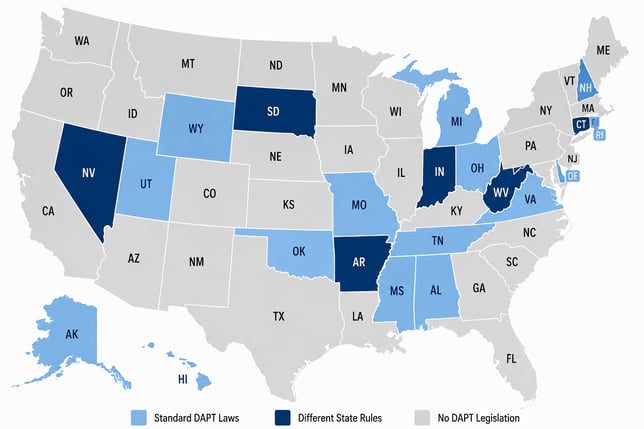
So, Is a DAPT Worth It?
A Domestic Asset Protection Trust isn't where I start. But for the right person, it’s absolutely worth it.
First, I want to make sure you have the right LLC structure, proper insurance, and a solid estate plan. Once you've built significant wealth, especially assets like investment accounts, cash, a second home, or other non-exempt property, a DAPT may be the next layer of protection worth considering.
Ultimately, it comes down to a simple cost-benefit analysis. How much do you have at risk, and is it worth creating another barrier between those assets and a future creditor? If the answer is yes, a properly structured DAPT can be one of the most valuable asset protection tools available.
The Bottom Line
A Domestic Asset Protection Trust isn't the right solution for everyone, but for the right person, it can be one of the most effective tools for protecting hard-earned wealth. But you need to plan ahead. Once a lawsuit or creditor claim exists, it's too late.
This isn’t something you want to guess and mess up. Every asset protection strategy should be built around your assets, your risk, and your long-term goals. Book a free call with my team at KKOS Lawyers, and we'll help you identify where you're exposed, evaluate your current structure, and recommend the strategies that make the most sense for your situation. Whether that's a DAPT, LLCs, estate planning, or another solution, you'll walk away with a clear plan to better protect everything you've worked so hard to build.
.png?width=6440&height=1438&name=KKOS%20Book%20a%20Call%20(2).png)
Frequently Asked Questions
Does a DAPT protect assets from existing creditors?
No. A Domestic Asset Protection Trust is designed to protect assets from future creditors, not existing ones. If you transfer assets after a lawsuit, debt, or other legal claim already exists, a court may determine that the transfer was fraudulent and undo the transaction. That's why every effective asset protection strategy starts before there's a problem.
Is a DAPT the same as a revocable living trust?
No. They serve two different purposes.
A revocable living trust is primarily an estate planning tool that helps manage your assets during your lifetime and allows them to pass to your heirs without probate.
A Domestic Asset Protection Trust is designed to create an additional layer of protection against future creditors while still allowing you to benefit from the assets held inside the trust under the terms of the trust. Most clients who need a DAPT will also have a revocable living trust because the two strategies work together, not in place of one another.
Who benefits most from a Domestic Asset Protection Trust?
Generally, a DAPT makes the most sense for business owners, real estate investors, professionals with higher liability exposure, and individuals who have accumulated significant non-retirement assets.
The right time to consider a DAPT isn't based on a specific income level. It's based on the amount of wealth you've built, the types of assets you own, and the level of liability risk you face. That's why every recommendation starts with a comprehensive review of your individual situation rather than a one-size-fits-all answer.
What Are the DAPT States?
As of 2026, 21 states have enacted some form of Domestic Asset Protection Trust (DAPT) legislation: Alabama, Alaska, Arkansas, Connecticut, Delaware, Hawaii, Indiana, Michigan, Mississippi, Missouri, Nevada, New Hampshire, Ohio, Oklahoma, Rhode Island, South Dakota, Tennessee, Utah, Virginia, West Virginia, and Wyoming.
While all of these states recognize some form of DAPT, they don't all offer the same level of protection. Each has its own statutes, requirements, and limitations, which is why states like Nevada, South Dakota, Delaware, and Alaska are often favored for their well-established asset protection laws. The right choice depends on your assets, where you live, and your overall asset protection strategy.