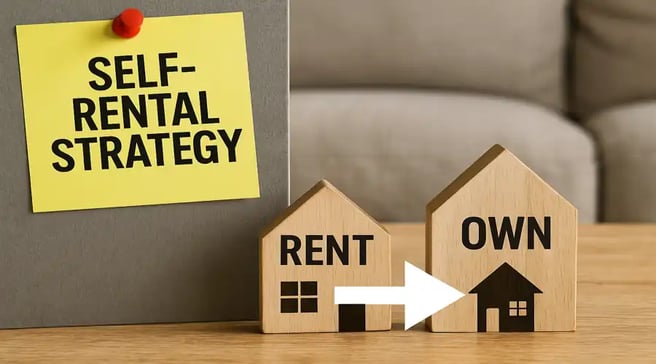




If your business pays rent every month, let me ask you a simple question: Who are you making wealthy? For most business owners, the answer is their landlord. But what if you could turn that monthly rent payment into an investment in your own future instead? That's exactly what the self-rental strategy is designed to do. When it's structured correctly, it can help you build wealth, create valuable tax deductions, and put one of your biggest business expenses to work for you instead of someone else.
What Is a Self-Rental Strategy?
The self-rental strategy is surprisingly simple. Instead of having your business lease office space, a warehouse, a shop, or another commercial property from an unrelated landlord, you purchase the property through a separate LLC. Your operating business, often an S corporation, then becomes the tenant and pays rent to the LLC that you own. In other words, you're paying rent to yourself.
That structure creates two important opportunities. First, you're building equity in a piece of commercial real estate that may appreciate for years to come. Second, it opens the door to valuable tax strategies that simply aren't available when you're renting from someone else.
Why I Love This Strategy
People sometimes ask me whether they should invest in the stock market, buy rental properties, or reinvest in their business. My answer is often, "Why not start with the building you're already paying for?" If your business consistently generates enough cash flow to pay rent every month, there's a good chance you should at least explore owning your own space.
I'm talking about much more than office buildings. Maybe it's a warehouse. Maybe it's a contractor's shop. Maybe it's a storage facility. Maybe it's an office condo. Whatever your business needs to operate, there's a good chance someone else currently owns it and is building wealth every time you send them a rent check. I'd rather see that wealth stay in your family.
Commercial Real Estate Is More Attainable Than You Think
One of the biggest misconceptions I hear is, "Mark, I can't afford to buy a commercial building." Maybe you can't buy the skyscraper downtown. Most people can't. But you don't have to.
Commercial office condos, warehouse condos, medical suites, flex space, and small industrial buildings are available in communities across the country. In fact, since COVID, many commercial properties have become more affordable as developers have divided larger buildings into individually owned units.
You also don't have to occupy an entire building yourself. Many business owners purchase a property with multiple suites or units, lease one to their own business, and rent the remaining space to other tenants. Those additional rental payments can help offset your mortgage, generate cash flow, and build equity while your business enjoys the benefits of the self-rental strategy.
Before you assume ownership is out of reach, spend a little time talking to a commercial real estate agent or lender. You might be surprised by what's available in your market and what your business can actually afford. There are even financing programs designed specifically for owner-occupied businesses, including SBA 504 and SBA 7(a) loans, which can make purchasing commercial property more attainable than many business owners realize. You have options.
The Tax Benefits Go Beyond Owning the Building
Building equity is reason enough to consider buying your own property, but the tax benefits can make the opportunity even more attractive.
When your self-rental is structured correctly, you may be able to take advantage of bonus depreciation and other accelerated depreciation strategies on qualifying components of the building. That can create substantial deductions without having to qualify as a real estate professional, something many business owners don't realize.
Remember, you're not depreciating the land. You're depreciating the building and many of the assets inside it. Depending on the property, that can include flooring, lighting, cabinetry, HVAC systems, parking lots, landscaping, and other improvements that may qualify for accelerated depreciation. With a cost segregation study, many of those components can be written off much sooner than the building itself.
That's where this strategy really starts to shine. You're taking a monthly expense your business was already paying, turning it into an investment that builds equity, and creating valuable tax deductions at the same time. It's one of the few opportunities where you can potentially improve your cash flow today while building long-term wealth for tomorrow.
What If the Property Includes Residential Rentals?
This is where a lot of business owners get tripped up. Let's say you buy a commercial building with a few residential rental units attached. Your business occupies the commercial space, but you rent the apartments to unrelated tenants.
The portion leased to your business may qualify for the self-rental strategy because your business is the tenant. The residential units are generally treated as separate rental activities because they're leased to unrelated tenants rather than your operating business.
Does that mean you shouldn't buy the property? Absolutely not.
I've said for years that rental property is one of the best wealth-building tools available. Those residential units can still generate cash flow, appreciate over time, and provide valuable tax benefits. They're just operating under a different set of tax rules than the commercial space occupied by your business.
Think of it this way. You're really making two separate investments. One is your self-rental, where your business is the tenant and you may qualify for additional tax advantages. The other is a traditional residential rental property that can build long-term wealth through appreciation, rental income, and depreciation. Both can be excellent investments, they just accomplish different goals.
The Structure Matters
Here's where I want you to slow down. I see business owners get excited about this strategy, then make one critical mistake. They have their operating business buy the building. Hell no. That's not how you want to structure a self-rental.
Instead, you form a separate LLC to purchase the property. Your operating business, whether it's an S corporation or another entity, becomes the tenant and pays rent to that LLC. When the rental property and the operating business have common ownership, you can make what's known as the Dash 4 election. In plain English, you're telling the IRS, "I own the operating business, I own the building, and my business is renting the property from me." The IRS says, "Okay, we understand. That's one economic unit." Meaning that when the requirements are satisfied, the activities can be treated as one economic unit for purposes of the passive activity rules.
That's what makes this strategy so powerful. You're separating the real estate from the operating business for legal protection while still creating a structure that allows you to take advantage of the tax benefits. Good legal planning and good tax planning work hand in hand.
This isn't a strategy you want to piece together after watching a few YouTube videos. Get the structure right from the beginning, and you'll save yourself a lot of headaches later.
Who Should Consider a Self-Rental?
This strategy isn't just for large companies or businesses with hundreds of employees. I recommend it all the time to small business owners who know they're going to stay in the same location for the foreseeable future.
Think about it. If you're a dentist, why wouldn't you own the building your practice operates from? The same goes for doctors, contractors, real estate brokers, restaurant owners, accountants, attorneys, and just about anyone else paying rent month after month to operate their business.
I've said it for years: you're your own best tenant. Your business is already paying rent every month. If that rent can help build your own wealth instead of your landlord's, why wouldn't you at least explore the opportunity?
The Bottom Line
Every month your business pays rent, someone is building wealth. The question is whether it’s you or your landlord. A properly structured self-rental strategy can help you build equity, create valuable tax deductions, and turn one of your biggest monthly expenses into a long-term investment in your own financial future.
But this is a strategy you want to get right before you buy the property. The wrong entity, ownership structure, or tax setup can undermine the benefits you’re trying to create. Book a Comprehensive Tax and Business Consultation with my law firm, KKOS Lawyers. We can run the numbers, coordinate the legal and tax structure, and help you determine how a self-rental fits into your overall wealth-building strategy.
Don’t buy the building first and figure out the structure later. These decisions can have long-term tax and legal consequences, so get the strategy right before you sign.
.png?width=6440&height=1438&name=KKOS%20Book%20a%20Call%20(2).png)